Embroidery Stitches

Illustrations and instructions by Christina Sherrod. © Christina Sherrod of Spruce And Fjell.
Also see:
Articles & Tips
Crafts & Decor Projects
Embroidery
Organizing Tips & Projects
Quilt Lessons
Glossary Of Stitches
Stitches can be used for basic sewing or decorative purposes. The decorative stitches can be functional, such as holding layers together, or decorative. By slightly changing the stitch, an entirely different look can be achieved. Mix and match stitches to create new designs.
For example, an outline embroidery stitch can be used to outline your design. Use any other decorative stitch to fill in the area. Children's coloring books provide wonderful "patterns" for embroidery. Expand your options by adding beads, decorative yarns, buttons and other items.
Backstitch
Provides secure stitching for sewing two fabric pieces together (in place of machine stitching). Creates lines or outlines.

Backstitch - Threaded Backstitch
Create a backstitch line. Then using one or two contrasting color threads, begin lacing the backstitch line by bringing the needle up through the fabric under the first back stitch, in the center of the stitch. Lace back and forth through the backstitch line. When finished, pull the thread down through the fabric under the final backstitch, in the center of the stitch.

Blanket Stitch
Often used to stitch on appliques. Also used around the perimeter of a blanket to hold layers. Provides definition and helps prevent fraying of edges of appliques or blankets.

Buttonhole Stitch
Stitches are made by the same method as the blanket, but are very close together and the stitches are shorter. Used around applique or hand sewn buttonholes. Also used as decorative stitching.
Chain Stitch
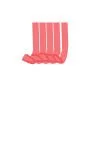
Used for decorative purposes. The distance between the points where the needle exits and enters the fabric determines the width of the chain. Variation can form leaves, flower petals etc. (see Lazy Daisy)

Couching Stitch
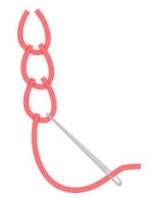
Consists of small straight stitches that hold down an underlying thread. Place one thread along your design outline, then stitch in place with contrast or same color thread. Used for decorative stitching, stems, outlining etc.

Feather Stitch
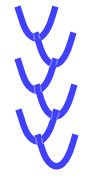
Creates vine or stem. Fills in an area with an interesting texture. Stitches can be "L" shape or "u" shape.
Fern Stitch
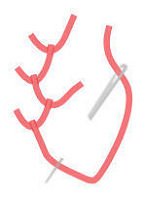
A fern stitch is created with three straight stitches of equal length, each originating at the same point, but stitched to three different end points. The starting point is at the base of each stitch; each stitch is created from bottom to top. Center stitch is created, then the left, then the right.

Fishbone Stitch
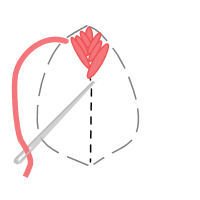
Fills in an area with straight stitches set in rows at opposite angles from center line. Creates a nice, textured center line while filling in small spaces. Commonly used for filling in leaves and other small areas. The center stitch at the top is created first, from top to base. Then, create the stitch on the right, bringing it across the center line at the base of the first stitch.
Fly Stitch
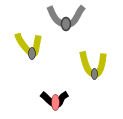
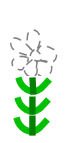
Completed in the same way as the chain, but only a single chain is made. Creates "insects", adds texture and pattern when used as fill, and can be used to create stem and leaves of small plants.
Interlaced Band Stitch
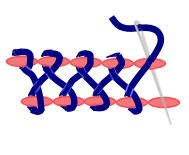
Create two lines of back stitches, one line 1/2 stitch offset to the other. With a contrasting thread, come up through the fabric under the first stitch. Wrap thread around stitch, up and over and down through the underside of the stitch. The contrast thread does not run through the fabric; it is laced through the two lines of stitches.
Lazy Daisy Stitch
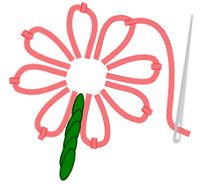
Variation of chain stitch. Creates petals, leaves, etc. In the following diagram, the lazy daisy creates the petals and an outline stitch (stem stitch) creates the stem.
Long and Short Stitch
Variation of satin stitch. Long and short straight stitches are made very close together. These stitches are used to fill in small areas such as flower petals, leaves, hearts and other shapes.

Outline Stitch
Adds definition by outlining object. Also used to create stems, branches, etc. (see Stem Stitch below). Stitches are worked from left to right and stitches are slightly slanted. Also called stem stitch.
Overcast Stitch
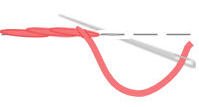
This stitch has more depth because the embroidery thread is stitched over an underlying thread (shown in grey). Used for making stems and outlining objects. The thread that will be covered is brought up at the starting point along with the embroidery thread. Hold the thread to be covered with one hand, being sure it stays on the lines of your design. Use small, straight stitches to secure underlying thread to project fabric.

Satin Stitch
Completely fills in an area. Stitches can be varying length and are very close together. Also see "Long and Short Stitch" on page 1.

Seed Stitch
Fills in an area with an interesting texture. Sraight stitches are of equal length and placed at varying angles. We show straight stitches of varying length in our example (shown as variation of stitch).

Stem Stitch
Same as outline stitch, but is used to create stems, branches, etc. (such as with Lazy Daisy with stem above). Stitches are worked from left to right and stitches are slightly slanted. Also called outline stitch.

Straight Stitch
Holds two pieces of fabric together, outlines an object or provides texture to an area. Simple and straight; can be varying lengths.

Swedish Weaving
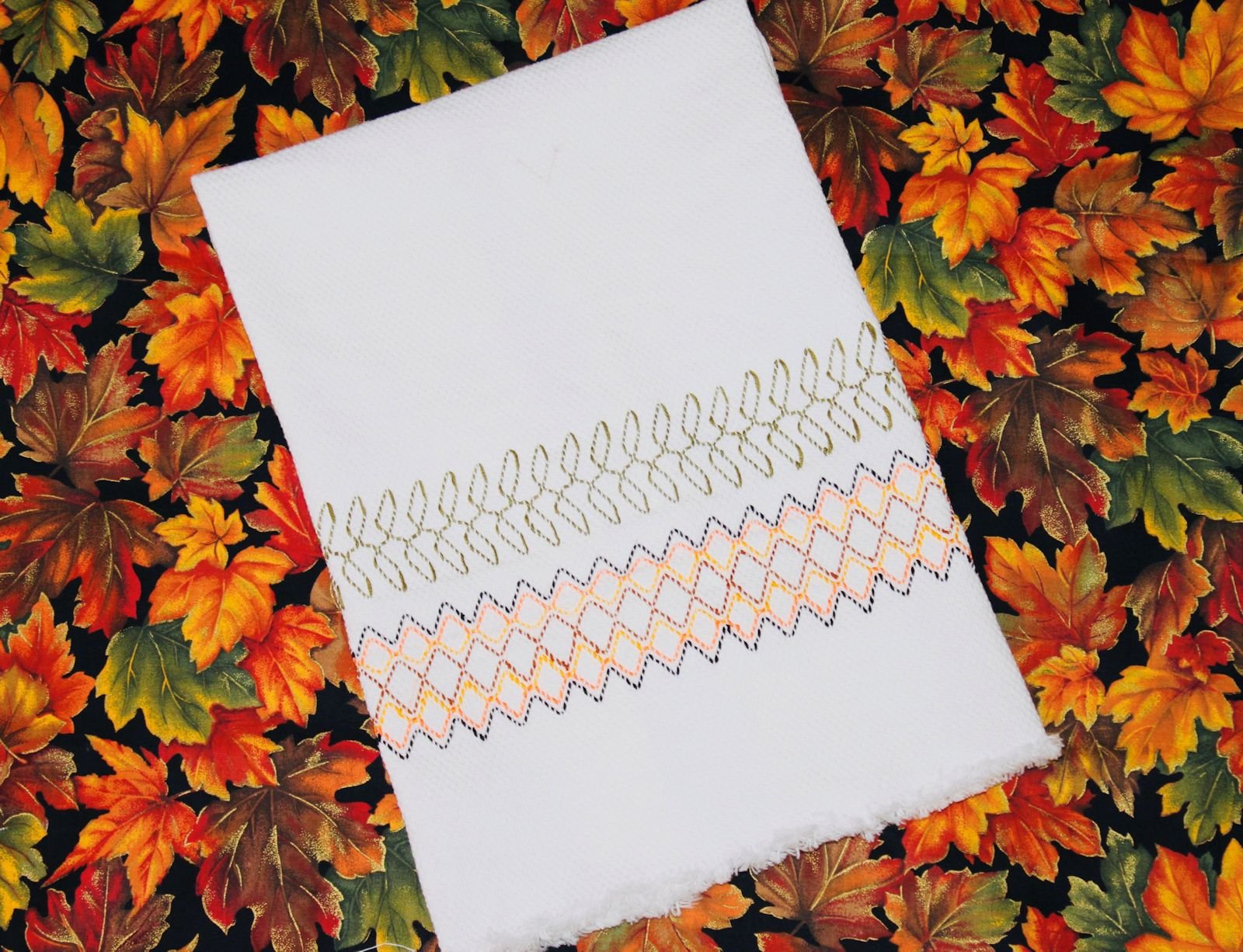
Also called Huck Weaving. I provide instructions and two free patterns for Swedish Weaving.
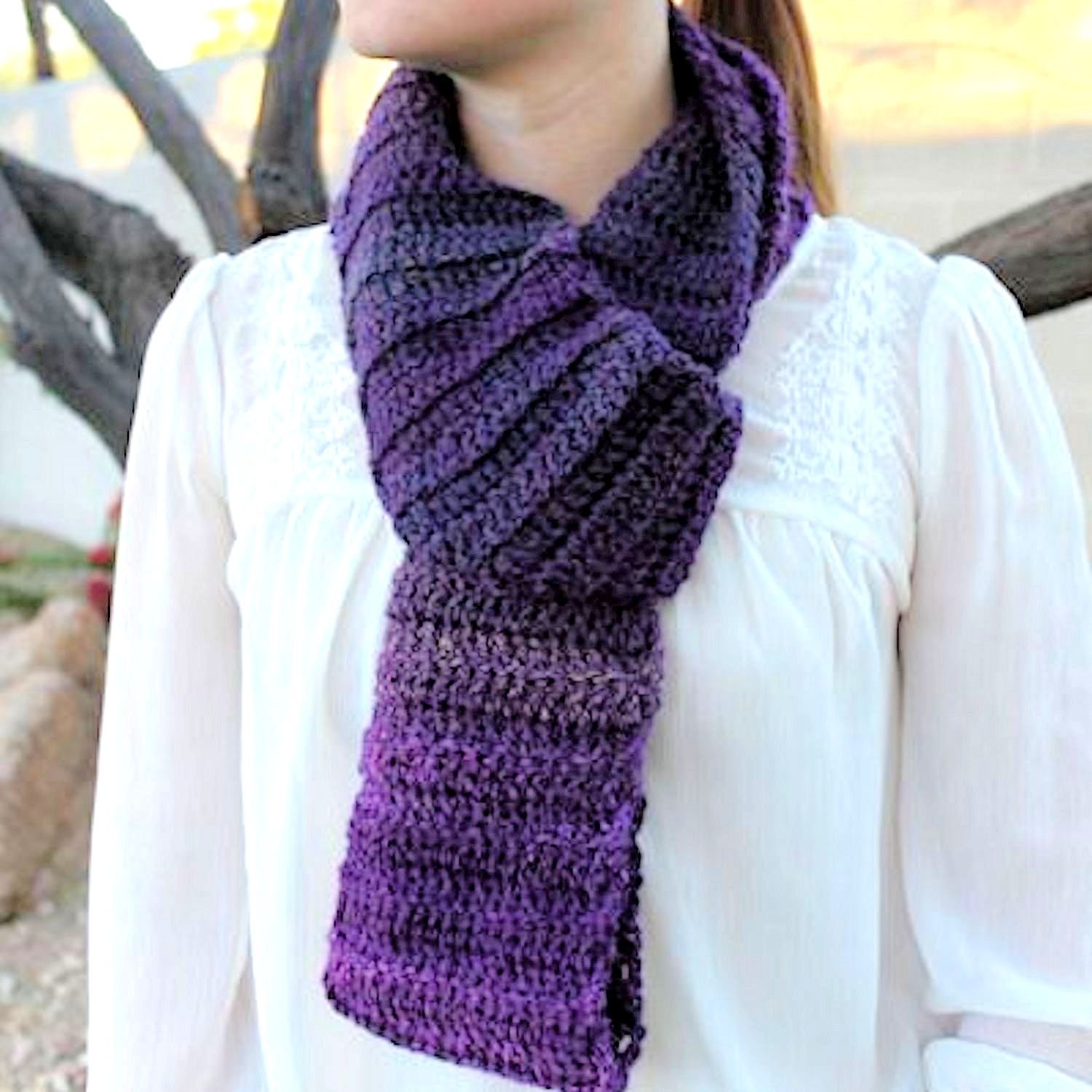
Super Simple Crochet
Only one stitch used: double crochet. Easy to customize.
Go to: Infinity Scarf Crochet
Follow Our Adventures
Stay Up To Date With Us




Our most popular Christmas decor projects.